

It was all a dream...
Waking up to bad plot devices


Hi friends,
This week was my birthday, which means I’m celebrating all week (yes, I celebrate all week) by doing things like going to see an 11 am showing of Hokum, getting rush tickets to a Dog Day Afternoon matinee on Broadway, and spending countless hours reading (TBR: Good Joy, Bad Joy by Mikki Brammer, which published May 5th.)
One thing I noticed in some of the stories I consumed was the return of the reviled dream ending. This is that ending, made most famous in The Wizard of Oz, when Dorothy wakes up and realizes it (the entire movie that we’ve just sat through) was…just a dream. None of it is real! So why should we care? We shouldn’t! Versions of this tricky gut punch continue to crop up now and again, and sometimes it works if the device does thematic work, and the protagonist’s distorted sense of reality reveals something about their lives that the “real” world couldn’t. But most often, the dream doesn’t mean or cost anything, and feels like the writer couldn’t figure out a way to tie the plot together.
Let’s get into it! But beware, SO many spoilers below!
Hokum (2026)
I love any story that entangles the supernatural and psychological, and Hokum is a meditation on this theme. Adam Scott stars as a brittle, surly novelist who travels to Ireland to scatter his parents’ ashes and becomes enmeshed with rumors of a witch haunting the hotel’s Honeymoon Suite. Murder, hauntings, and gates of hell ensue, but in the final act, a bellhop admits to spiking the whiskey with psilocybin mushrooms, and possibly it was all… a hallucination.
Yesteryear by Caro Claire Burke (2026)
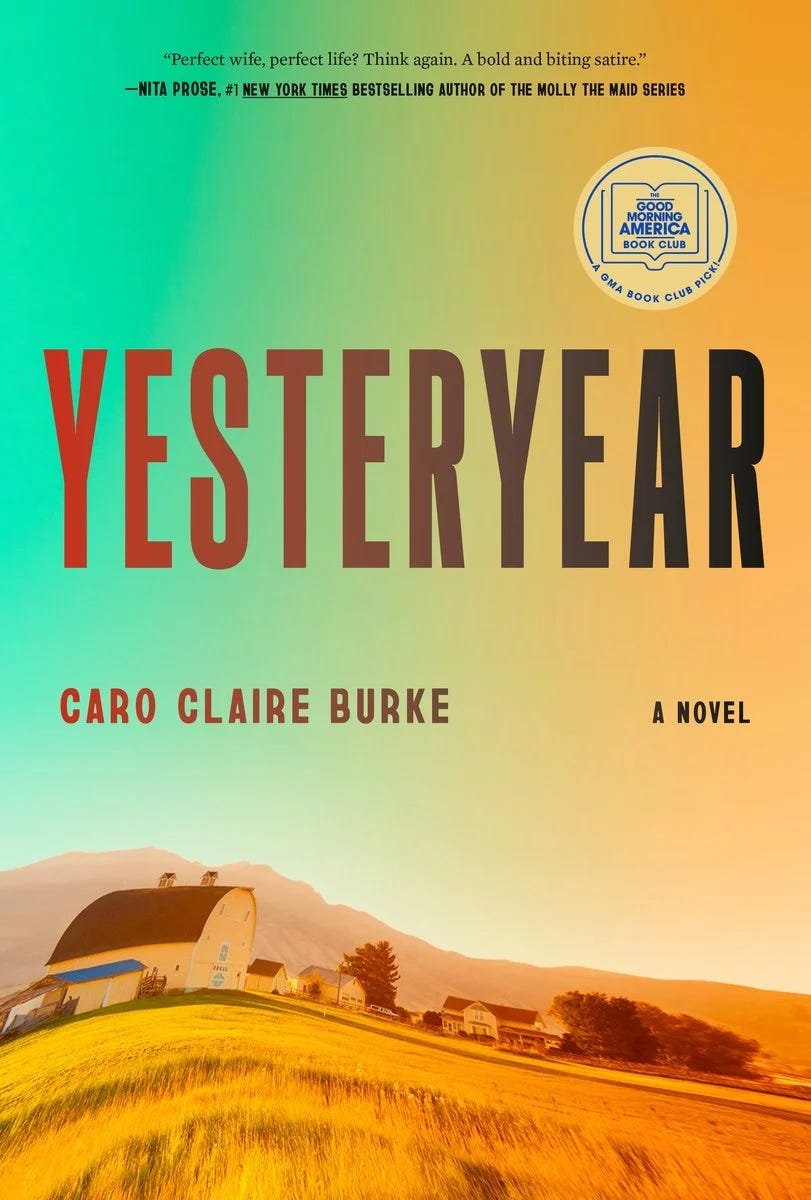
Caro Claire Burke’s buzzy book is definitely worth reading, and as I’ve said, I practically tore through it in one sitting. A tradwife influencer wakes up in 1855 and is forced to do actual chores with a family that is uncannily not her own. The story jumps back and forth in time, as she wonders if this is some sick reality show or an elaborate prank. But the twist [STOP READING HERE, LAST WARNING] is that she built it herself, and it was all…disassociation.
Fight Club (1999)
David Fincher’s adaptation of Chuck Palahniuk’s novel is the rare case where the hallucination-as-reality works, because of the narrator’s full-blown disassociation, who has created a whole other character to place his aspirations of who he wants to be. When the reveal comes, it doesn’t feel like a cheat because clues have been hidden in plain sight along the way. It isn’t a cheap plot mechanic when it’s necessary to tease out a truer story. In the end, it was all…a psychotic break.
What’s your favorite dream scenario? Comment below!
See ya next week!
Happy, happy birthday, Meredith!!! ❤️❤️
OMG I hated the ending of Yesteryear. It totally ruined it for me! I honestly think it's one of the worst endings I've read in a while. It would have been so much better (and more on theme) if she'd been gaslit or forced by the father-in-law and a production crew to be in this reality to 'redeem' herself. Also, if she's trying to escape and doesn't want this situation anymore then that would be a great legal defense but instead she's serving time? It seems like the author had this great initial idea and didn't know how to get out of it.